Greenwich Council: floral display permits for outdoor events
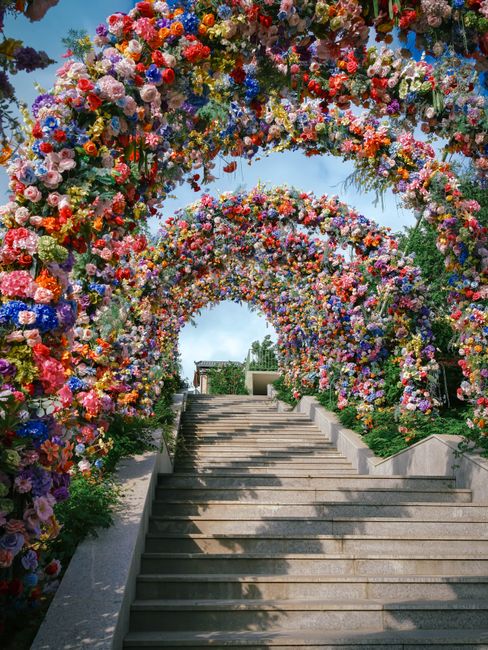
If you are planning a wedding, festival, community fair, brand activation, or a seasonal celebration in Greenwich, the floral details can make the whole thing sing. But before you start dreaming up arches, aisle flowers, entrance urns, or big statement pieces, it is worth understanding Greenwich Council: floral display permits for outdoor events. In practice, this is about more than decoration. It is about whether your floral installation is allowed in the space, how it affects public access, and whether the council needs to review it before you go ahead.
Truth be told, a beautiful display can become a headache if it is placed in the wrong spot, fixed in the wrong way, or installed without the right permissions. This guide walks you through how floral display permits usually work in Greenwich, what event organisers should think about, and how to avoid the classic last-minute scramble. You will also find a checklist, a comparison table, and practical advice that reflects real-world event planning rather than vague theory.
Why Greenwich Council: floral display permits for outdoor events Matters
Outdoor events in Greenwich often happen in spaces where footfall is heavy, the setting is visually sensitive, and public access matters. That is why floral installations are not just a styling choice. They can become a planning, access, and safety issue very quickly. A large floral arch across a walkway, for example, may look lovely in a sample photo, but in the real world it can block an accessible route, interfere with emergency access, or create a trip hazard once people start moving around with bags, pushchairs, or a glass in hand.
For event organisers, permits matter because they help confirm that your display is appropriate for the location, the scale of the event, and the space available. They also help you avoid awkward conversations on the day. Nobody wants to be told, five minutes before guests arrive, that the installation needs to come down. It happens. More often than you would think, actually.
There is also a reputational angle. A council-approved floral display feels far more professional than a rushed setup tucked into a corner with no clear arrangement or risk checks. If you are hosting clients, suppliers, or community partners, that attention to detail makes a difference. People notice the calm behind the scenes, even if they never say it out loud.
In Greenwich, the smartest approach is to treat floral permits as part of event logistics, not as an afterthought. That means looking at the event map early, identifying where flowers will sit, and deciding whether those displays are purely decorative or whether they count as structures, obstructions, or temporary installations that need approval.
Expert summary: A floral display permit is usually less about the flowers themselves and more about the impact of the display on space, safety, access, and the public realm. The earlier you treat it as a formal planning item, the easier the whole event becomes.
How Greenwich Council: floral display permits for outdoor events Works
Every council process has its own shape, but the underlying logic is usually similar. You submit details of the outdoor event, explain what floral displays you want, show where they will go, and provide enough information for the council or landowner to assess the impact. The assessment may focus on safety, public access, appearance, and whether the display could damage surfaces, planting, street furniture, or surrounding property.
For a small planter grouping at a private venue, the process may be straightforward. For a larger installation on public land, near a parade route, outside a venue entrance, or on a shared pavement, the review can be more involved. The key thing to understand is that outdoor floral displays are not all treated the same. A compact table centrepiece on a courtyard terrace is a very different proposition from a flower wall positioned beside a busy pedestrian path.
Typically, organisers should expect to share:
- the event date, time, and exact location
- the purpose of the floral display
- dimensions, layout, and placement details
- installation and removal timings
- how the display will be fixed or weighted
- any associated structures such as arches, stands, or plinths
- risk controls, including access and emergency considerations
To be fair, that sounds like a lot. But most of it is the sort of detail you should already have in your event plan. If you are working with a florist, event stylist, or production team, they can often provide the technical information quickly. In our experience, the delays happen when no one owns the process. One person assumes the venue is handling it. The venue assumes the supplier is handling it. And the clock keeps ticking. Not ideal.
One useful way to think about it is this: the permit is there to reduce uncertainty. The council can see what you are proposing, you can understand any conditions early, and everyone avoids a messy surprise on event day.
Key Benefits and Practical Advantages
Getting the right approval for floral displays is not just about compliance. It also has practical advantages that make the event run more smoothly. If you are weighing up whether the admin is worth it, the short answer is yes. Usually, very yes.
- Fewer last-minute changes: Approved plans are less likely to be challenged on the day.
- Safer guest movement: You can position displays without blocking access or creating bottlenecks.
- Better design decisions: Understanding the restrictions helps you choose the right style and scale.
- Smoother supplier coordination: Florists and event teams can work from a clear brief.
- Stronger professional impression: Guests see a polished, well-managed event rather than a rushed setup.
- Reduced risk of damage: Careful approval helps protect paving, walls, fixtures, and planting beds.
There is also a subtle but important benefit: it helps your event feel intentional. The best floral displays do not shout for attention. They frame the event, guide people through the space, and make the whole setting feel considered. Outside a Greenwich venue, with the evening light softening and the first guests arriving, a well-placed arrangement can do a lot of quiet work.
And yes, flowers can be surprisingly strategic. A display near an entrance can help direct footfall. A smaller arrangement can soften a harsh barrier or temporary fence. A line of planter-style flowers can create a natural boundary without making the event feel fenced in.
Who This Is For and When It Makes Sense
This topic matters to a wide range of people, not just large event agencies. If your event has any outdoor floral element and it touches shared space, public access, or a council-managed area, this is likely relevant. That includes one-off events and recurring events alike.
You may need to look at a floral display permit if you are:
- planning a wedding reception in an outdoor area
- organising a civic or community event
- running a charity fundraiser with outdoor styling
- setting up a market, fair, or seasonal celebration
- managing a brand launch or promotional event
- decorating an entrance, route, or audience area with fresh flowers, artificial flowers, or planters
- coordinating with a venue that sits close to public walkways or shared access routes
It also makes sense if your floral display is not technically large, but it is unusual. For example, a flower-covered frame bolted to a temporary platform might be small enough in footprint to seem harmless, yet still need review because of wind exposure, fixing method, or crowd interaction. People lean on things. Children touch things. Someone in a hurry definitely brushes past things. Event planning has a funny way of reminding you that "small" is not always simple.
If you are unsure whether your display needs a permit, treat it as a question worth checking early. That is not overcautious. That is good event management.
Step-by-Step Guidance
Here is a practical way to approach Greenwich Council floral display permits for outdoor events without turning it into a bureaucratic marathon.
- Define the floral concept early. Decide whether you need arches, aisle arrangements, entrance flowers, freestanding planters, hanging features, or a full floral backdrop.
- Map the exact location. Mark where each display will sit and how much space it will occupy. Include nearby paths, exits, and visible obstacles.
- Check what is public and what is private. A display in a private garden is very different from one on a shared path, street-facing forecourt, or public square.
- Gather supplier details. Your florist should be able to supply dimensions, materials, anchoring methods, and installation timings.
- Review access and safety. Make sure your setup does not block wheelchair access, prams, emergency routes, or service access.
- Prepare supporting documents. Photos, simple diagrams, a run sheet, and a basic risk assessment can all help.
- Submit in good time. Leave enough lead time for questions or minor revisions. Rushing rarely helps.
- Respond quickly to feedback. If the council asks for adjustments, deal with them promptly and clearly.
- Confirm installation and removal windows. This helps prevent confusion with venue staff, contractors, or public access timings.
- Brief the team on the day. Make sure whoever is on site knows where the displays go, who is responsible, and what to do if conditions change.
A quick note on weather: outdoor floral displays are vulnerable to wind, sun, rain, and temperature swings. A setup that looks perfect at 9 a.m. may need extra weighting, shading, or adjusting by late afternoon. This is especially true in exposed locations. If you are planning near the river or in an open square, do not underestimate a gusty day. It can make a neat arrangement look a bit unruly, fast.
Expert Tips for Better Results
There are a few habits that consistently improve outcomes. They are not flashy, but they save time and stress.
- Use simpler formats where possible. Freestanding arrangements are often easier to approve than fixed or oversized features.
- Keep circulation space generous. What feels roomy to a designer can feel tight to a crowd. Leave more room than you think you need.
- Choose materials with safety in mind. Lightweight blooms can still need robust support. Heavy containers need stability. Sharp fixings are a no-go.
- Prepare a backup plan. If wind picks up or weather changes, know which pieces can be moved or reduced.
- Coordinate colour and sightlines. In a busy setting, floral colour should support the event flow, not compete with signage or safety markers.
- Make one person responsible. A single point of contact stops the classic "I thought someone else emailed them" problem.
One small but useful tip: take site photos from the guest's point of view, not only from your own. That is where practical issues show up. A display can seem fine from the edge of a plan, then look far more intrusive once you see it at eye level, between two crowd barriers, with people arriving in coats and holding umbrellas. That view tells the truth.
If the event is tied to branding, try to balance floral drama with usability. The prettiest option is not always the most workable. The best option is the one that survives a full event day without fuss. There is a difference.
Common Mistakes to Avoid
Most permit problems come from avoidable oversights rather than bad intentions. The floral idea itself may be lovely; the issue is usually in the setup.
- Leaving the application too late. Councils, venues, and suppliers need time to review details.
- Underestimating footprint. A display often takes up more room than the sketch on your phone suggests.
- Ignoring access routes. This is one of the fastest ways to create problems.
- Using weak fixings or unstable bases. Decorative does not mean lightweight enough to wobble.
- Forgetting removal logistics. Taking things down after dark, after weather exposure, or without access can be awkward.
- Assuming venue approval equals council approval. Not always. They are different checks.
- Not planning for weather. Outdoor floral work needs a weather-minded brain, frankly.
Another common mistake is making the display too tall or too dense for the location. It might look fantastic in a catalogue, but in a compact outdoor event space, oversized florals can feel cramped and block sightlines. If guests can't see where they are going, or if staff can't monitor the space properly, the design is fighting the event rather than supporting it.
And one more, because it matters: do not assume artificial flowers are automatically easier. They may be lower maintenance, but they still count as an installation and can still require approval if they affect public space or safety.
Tools, Resources and Recommendations
You do not need an elaborate toolkit to handle permit planning well. A few simple resources can make the process far easier.
- Site plan: A simple scaled sketch or annotated map showing where the floral pieces will sit.
- Photo set: Current images of the event area, especially entrances, walkways, and access points.
- Dimensions sheet: Width, height, depth, and base size for each display.
- Risk notes: Short notes covering stability, weather response, and pedestrian safety.
- Supplier brief: A clear one-page summary for your florist or production team.
- Schedule: Installation, inspection, event start, and removal timings in one place.
If you are looking at broader event logistics, it can also help to review related pages on venue service, delivery timing, and care instructions. For example, if floral materials are being delivered as part of a wider setup, the practical details on delivery arrangements and flower care guidance can help you plan the handover and keep arrangements looking their best for longer.
For organisers managing multiple events, a supplier relationship matters too. If you handle recurring bookings, a page like corporate accounts may be useful when you need reliable ordering, repeat scheduling, or account-based coordination. It is one of those boring-but-brilliant details that saves time later.
And if your event work includes a wider London reach, the local service area pages can help you orient planning for different districts, from Greenwich itself to nearby London coverage. Not every event sits neatly in one little box, does it?
Law, Compliance, Standards, or Best Practice
This area can be sensitive, so it is best to stay careful. The exact rules for floral display permits depend on the event location, the landowner, and the nature of the installation. Some displays may be treated as temporary structures, some as decorative additions, and some may trigger extra scrutiny because they sit in public space or affect access. The practical principle is straightforward: if your floral installation changes how people move through a space, or if it interacts with public land, treat it as a compliance issue as well as a design one.
In the UK event sector, the usual best practice is to consider:
- public safety - no unstable structures, sharp components, or hazardous materials
- accessibility - maintain clear routes for wheelchair users, pushchairs, and staff movement
- crowd management - avoid pinch points and unwanted bottlenecks
- weather resilience - account for wind, rain, and heat
- property protection - avoid damage to paving, planting, walls, or fixed features
- timely removal - do not leave displays to outstay their welcome
It is also wise to speak carefully about ownership. If a floral arrangement is installed on private event grounds, the venue may have the lead. If it spills into public-facing space, the council or another authority may need to be consulted. That split responsibility can be confusing, so get it written down. A quick email trail now can save a lot of back-and-forth later. Nobody enjoys an event-day jurisdiction mystery.
Where specialist conditions apply, follow them closely. If a permission includes restrictions on height, fixings, removal times, or access widths, those conditions are usually there for a reason. They are not decorative suggestions. They are part of the approval.
Options, Methods, or Comparison Table
Different floral display approaches suit different event types. A neat comparison helps narrow things down before you commit to a design.
| Display type | Best for | Permit complexity | Practical notes |
|---|---|---|---|
| Small freestanding arrangements | Private venues, receptions, smaller outdoor gatherings | Lower | Usually easier to place and remove; still check access and stability. |
| Planter-based boundaries | Space definition, queuing lanes, soft crowd control | Moderate | Useful where you want structure without hard barriers. |
| Entrance arch or flower frame | Weddings, launches, photo moments | Moderate to higher | Needs careful fixing, weight control, and clear circulation space. |
| Large floral wall or backdrop | Brand activations, statement photo areas | Higher | More likely to need approval because of size, wind exposure, and footprint. |
| Hanging floral features | Decorative indoor-outdoor threshold areas | Higher | Structural checks matter a lot here; keep public movement in mind. |
As a rule of thumb, the more the display behaves like a structure, the more careful you should be. That does not mean you cannot be creative. It just means the creative idea needs a practical wrapper around it. A beautiful event is built on that balance.
Case Study or Real-World Example
Here is a realistic example based on a common Greenwich-style event scenario. A community organisation plans an outdoor summer celebration near a public-facing venue entrance. They want two floral pillars at the gate, a low planter line leading into the reception area, and a flower-covered backdrop for photos. At first glance, the setup seems straightforward. Then the team notices that the main entrance path is also the only clear route for service access and wheelchair entry.
Instead of forcing the original design, they revise it. The pillars are moved wider apart, the planter line is shortened, and the backdrop is shifted slightly deeper into the event space so it no longer interrupts the access route. The florist also swaps out one heavy frame for a lighter modular option, which makes installation easier and reduces the chance of surface damage.
The result? The event still looks polished, but the layout works in real life. Guests arrive without squeezing past a decorative obstacle. Staff can move equipment through the space without lifting things awkwardly. The photos look good. Most importantly, no one is standing around arguing about whether the entrance is blocked. Always a bonus.
That kind of adjustment is exactly why permits and pre-approval matter. They force a conversation about reality, not just mood boards. And in event work, reality wins every time.
Practical Checklist
Use this checklist before you submit or finalise a floral display plan for an outdoor Greenwich event.
- Have I confirmed the exact event location and who controls it?
- Do I know whether the floral display will sit on public land, private land, or a shared boundary area?
- Have I mapped the display footprint and circulation space?
- Do I have dimensions, photos, and a clear layout?
- Have I checked accessibility routes and emergency access?
- Do I know how the display will be fixed, weighted, or stabilised?
- Have I planned for weather, especially wind and rain?
- Do I know when installation and removal will happen?
- Has the florist or supplier reviewed the site constraints?
- Have I allowed enough time for approval, amendments, or questions?
- Have I briefed the on-site team on responsibilities?
- Have I documented any special conditions or restrictions?
If you can tick most of those boxes, you are already ahead of the game. A lot ahead, honestly.
Get a free quote today and see how much you can save.
Conclusion
Greenwich Council floral display permits for outdoor events are really about making sure your event looks good, works safely, and runs without awkward surprises. The best floral ideas are the ones that respect the space they are placed in. That means thinking about access, weather, scale, and timing as early as you think about colour or style.
If you are planning a wedding, community event, launch, or seasonal gathering in Greenwich, the smartest route is simple: define the display, check the setting, gather the details, and leave enough time for review. It is one of those tasks that seems small until the day arrives, and then it suddenly becomes very important. Better to handle it calmly now than hurriedly later.
Done properly, a floral display does more than decorate a space. It gives the whole event a bit of grace. And that, to be fair, is what good planning is really for.
Frequently Asked Questions
Do I need a permit for every outdoor floral display in Greenwich?
Not always. Small decorative arrangements in clearly private spaces may not need council permission, but anything that affects public access, shared space, or a council-controlled area should be checked carefully.
What counts as a floral display for an outdoor event?
It can include arches, flower walls, planters, entrance arrangements, floral frames, aisle features, and decorative installations that are placed outside. The key question is often not the flowers themselves, but how and where they are installed.
How far in advance should I plan a floral display permit?
As early as possible. Lead time matters because you may need site details, supplier drawings, venue approval, and amendments. Rushing is where avoidable problems start creeping in.
Will artificial flowers be easier to approve than fresh flowers?
Sometimes they are simpler from a maintenance point of view, but they still need to be assessed if they form part of a larger installation or affect access and safety. Artificial does not mean automatic approval.
Can a florist handle the permit process for me?
They can help with the technical details and may support the submission, but responsibility usually sits with the event organiser or venue lead. It is best to assign one person to oversee it all.
What information is usually needed for approval?
Expect to provide the event date, location, layout, display size, installation method, removal plan, and any safety or access notes. Photos and a simple diagram are very helpful too.
What if the council asks for changes to the floral design?
That is normal. The best response is to adapt quickly and keep the design flexible. Often, a small adjustment to position, size, or fixing method is enough.
Are floral arches more difficult to approve?
They can be, mainly because they behave more like structures than decorations. Height, stability, wind resistance, and footfall around the arch all matter.
Can floral displays block a walkway if the event is busy?
They should not. Clear circulation is a core issue in event planning. If a display could create a bottleneck or reduce accessible movement, it needs to be redesigned.
What are the biggest mistakes organisers make with outdoor floral displays?
The most common mistakes are leaving the process too late, forgetting access needs, underestimating the footprint, and not planning for weather. Those are the ones that tend to cause stress on the day.
Does Greenwich Council care about the size of the floral display?
Usually yes, because size affects safety, visibility, access, and how the display fits into the space. A modest arrangement is easier to manage than a large feature, especially outdoors.
What should I do if I am not sure whether my floral display needs approval?
Start by treating it as if it might. Gather the details, speak to the venue or landowner, and prepare enough information to check the issue properly. A cautious approach is often the safest and simplest one.
Can floral displays be installed and removed on the same day?
Yes, often they can. In fact, same-day installation and removal is common for many outdoor events. The key is making sure the timing is realistic and does not clash with guest arrival or public access.
What is the best way to keep an outdoor floral display stable?
That depends on the design, but the basics are secure bases, suitable weighting, sensible positioning, and keeping the display appropriate for the weather conditions. A stable display is one that has been designed for the actual site, not just a pretty mock-up.