Selling on Borough Market: London council rules for florists
If you are thinking about Selling on Borough Market: London council rules for florists, the first thing to know is this: the market is not a casual pop-up pitch where you just turn up with a bucket of blooms and hope for the best. Borough Market has its own trading expectations, and any florist hoping to sell there needs to understand permissions, stall standards, council and market management requirements, and the practical realities of working in a busy central London setting. It sounds a bit formal, and yes, it can be. But once you understand how the pieces fit together, the path becomes much clearer.
In this guide, we will walk through what the rules usually mean in practice, how floristry fits into market trading, what to prepare before applying, and the common mistakes that trip people up. You will also find a checklist, a comparison table, and a realistic example to help you judge whether Borough Market is the right fit for your business. Let's face it, selling flowers in a place with footfall this strong is exciting, but only if the basics are handled properly.
Why Selling on Borough Market: London council rules for florists Matters
Borough Market is one of those places where the setting itself does half the work. People come expecting quality. They browse with intent. They are often looking for something fresh, seasonal, and a little more special than the standard supermarket bunch. For florists, that is a real opportunity. But opportunity and compliance travel together here. If you ignore the rules, the market can become an expensive lesson in disappointment.
Why does this matter so much? Because trading in a high-profile London market typically involves more than one layer of control. There may be market operator rules, local authority expectations, business registration obligations, environmental health considerations, waste handling expectations, trading hours, and insurance requirements. Sometimes the exact responsibility sits with the market operator rather than the council, and sometimes the council has a direct role. The important thing is to confirm which body controls what before you invest time and money.
For florists, this is especially important because flowers are perishable. You are not selling hard goods that can sit on a shelf for weeks. Temperature, display layout, water management, packaging, and stock rotation all matter. A stall that looks beautiful at 10 a.m. can look tired by lunchtime if the systems behind it are weak. A quick example: a florist bringing mixed stems from early morning markets may be fine on product quality, but if the stall has poor water storage or the display is crowded, the market atmosphere works against them. Pretty flowers do not forgive poor handling. They really don't.
Understanding the rules early also helps you decide whether Borough Market suits your trading model. Some florists thrive in busy, high-turnover environments. Others do better with weddings, pre-orders, or slower retail spaces. The rules are not just red tape. In practice, they help you understand the commercial shape of the pitch.
How Selling on Borough Market: London council rules for florists Works
At a practical level, selling on Borough Market usually means applying for permission to trade, agreeing to the stall or unit terms, and proving that you can meet the market's operational standards. The exact application route can vary, so the safest approach is to treat the process as a formal trading enquiry rather than assuming a general market stall is available.
For florists, the system often revolves around whether you are a trader with a permanent pitch, a regular casual trader, or a seasonal seller. Each model has different expectations. A permanent or recurring presence may require stronger proof of business capability, consistent supply, and a more robust trading plan. A casual or seasonal arrangement may focus more on product fit, presentation, and reliability.
Typical requirements often include:
- business identity and trading details
- product description and sourcing information
- public liability insurance
- food or plant handling considerations where relevant
- stall design or display approach
- waste management and recycling plans
- ability to operate within market hours
Florists sometimes assume that because flowers are non-food items, compliance is simple. Not quite. While floral retail is generally less regulated than hot food or catering, you still have duties around safe display, access, waste, and, where applicable, any goods that might be considered plant-related stock with special handling needs. If you sell arrangements with accessories, vases, candles, or plant care products, those extras can add another layer of responsibility.
Another thing worth knowing: market rules are often practical rather than theoretical. In other words, they care whether your stall can work smoothly on a windy, wet, crowded London morning. Can your buckets stay secure? Can customers move safely? Can you keep stock looking fresh through a long day? That is the real test. A perfectly drafted application means little if your day-to-day setup is shaky.
If you are already exploring other service or trading content, it can also help to look at how a business presents itself more broadly. For example, if your florist operation includes corporate displays, event work, or nearby delivery coverage, you may want to align the market pitch with your wider service model. In that sense, broader planning matters as much as the stall itself. A useful place to think about service positioning is your wider business presentation, though the market permission still stands on its own and should be treated separately.
Key Benefits and Practical Advantages
For the right florist, Borough Market can be a strong trading environment. The first advantage is obvious: footfall. People who visit busy central London markets are often already in a buying mindset. They are not there by accident, and that makes a difference.
Here are the main practical benefits:
- High-intent customers: visitors tend to be open to quality products and impulse purchases.
- Strong brand visibility: a market presence can make a small florist feel much more established.
- Feedback in real time: you see quickly which stems, colours, and price points land well.
- Flexibility: depending on the trading arrangement, you may be able to test offers before committing to a larger retail model.
- Seasonal storytelling: flowers lend themselves beautifully to market presentation, especially around spring, summer weddings, and festive periods.
There is also a quieter benefit that often gets missed: market trading can sharpen your operations. You learn to prep faster, display better, price more clearly, and speak to customers with confidence. That is valuable whether you stay on the market for years or use it as a stepping stone to something else.
For a florist, another advantage is visual differentiation. Borough Market rewards businesses that look intentional. A well-arranged stall, with fresh water, tidy signage, and a clear colour story, can stop people mid-stride. You can almost hear the little pause when someone spots the roses or the seasonal British peonies. That pause matters. That is the moment a browse turns into a sale.
Practical takeaway: selling in Borough Market is not just about having great flowers. It is about proving you can trade neatly, safely, and consistently in one of London's busiest public-facing environments.
Who This Is For and When It Makes Sense
This topic is most relevant if you are a florist, flower grower, floral designer, plant seller, or small business owner thinking about a market pitch in central London. It is also useful if you already sell at local markets and want to upgrade into a more visible location.
It tends to make sense for:
- independent florists looking for a premium retail presence
- growers who want to sell directly to customers
- floral designers who can create distinctive, market-ready displays
- seasonal traders wanting a short-term, high-visibility test
- businesses with strong supply consistency and a clear brand
It may not be the right move if your business depends on very low overheads or if your stock is too limited to keep a stall looking full through the day. Borough Market can be busy, lively, and brilliant, but it is not forgiving of weak stock planning. Truth be told, an underfilled flower stall can look a bit sad by noon.
The rules also matter if you are a new trader because permissions, insurance, and public-facing standards are often where first-time sellers get stuck. A lot of people focus on product and forget the practical stuff. Then they are surprised when they are asked for documents, trading evidence, or a stall plan. That is normal. It just means you need to prepare like a business, not like a hobby.
If you are still shaping your wider offer, it may help to organise your market and non-market services together under one professional structure. Businesses often benefit from having a joined-up approach to branding, enquiries, and customer journey. For example, some flower sellers build a broader service presence alongside their retail activity, so their market pitch supports the rest of the business rather than sitting in isolation.
Step-by-Step Guidance
If you want to approach Borough Market properly, do it in stages. Trying to rush the process is where avoidable issues creep in. The good news? It is manageable if you keep it structured.
- Clarify your trading model. Decide whether you want a permanent pitch, a regular trading slot, or a seasonal presence. Your application, costs, and expectations will depend on this.
- Review the market requirements carefully. Read the trader rules, ask what documents are needed, and confirm who issues permissions. Do not assume the council and market operator have the same roles.
- Prepare your business documents. Have your insurance, ID, business details, and any registration paperwork ready. If you are a limited company or sole trader, make sure your records are tidy.
- Plan your product range. Think about what sells well in a busy market: hand-tied bouquets, seasonal bunches, small gift items, wedding consultation leads, or potted options if allowed.
- Design for display and speed. Your stall needs to look attractive but also work quickly. Customers should understand what you sell in a glance.
- Test your set-up in real conditions. Can your buckets stay stable? Is the signage legible? Can you serve people without tangling stems or water everywhere?
- Prepare your pricing logic. Market shoppers like clarity. Ambiguous pricing slows down sales.
- Build a waste and replenishment routine. Flowers age, leaves drop, water needs replacing. Set a routine that keeps the stall clean and fresh.
- Train your team. If someone else will help, they need to know how to greet customers, maintain displays, and handle stock responsibly.
- Review performance after the first few trading days. What sold, what stayed, what looked tired too early, and what questions did customers ask repeatedly?
A practical tip: write down the questions customers ask on day one. You will notice patterns very quickly. People often ask where the flowers come from, how long they last, whether they are local, and what is in season. Those questions are gold. They tell you exactly how to shape your display and your pitch.
Expert Tips for Better Results
Once you are through the basic permission stage, the real work is making the pitch perform. Here are the things that make a meaningful difference.
- Keep the visual story simple. A clean, focused colour palette can be more effective than a crowded display.
- Lead with seasonal stock. In a market environment, seasonal flowers often feel more credible and more desirable.
- Use height and movement carefully. Tall arrangements can draw attention, but they should not block sightlines or make the stall feel cluttered.
- Make pricing obvious. Customers should not have to ask before they understand the value.
- Build a signature item. A recognisable bouquet style or wrap can help people remember you.
- Keep spare materials close. Twine, paper, snips, wipes, labels, and fresh water sound mundane, but they save the day.
Another tip, slightly underrated: speak plainly. A friendly, low-pressure conversation often sells more than a rehearsed brand speech. You do not need to perform. Just explain what is fresh, what is local if that applies, and what looks best today. That kind of honesty builds trust fast.
If your business also operates online or through other channels, think about continuity. The market stall should feel like part of the same business, not a random side quest. Customers remember consistency. They notice it too. Even the way you wrap a bouquet can communicate whether you are organised or merely winging it, and yes, people do pick up on that.
A final human tip: arrive a little earlier than you think you need to. London mornings are often busier, noisier, and more compressed than they look on a calendar. A calm setup gives you a better chance of staying calm when the first wave of customers arrives.
Common Mistakes to Avoid
Most problems with market trading are not dramatic. They are small, repeated oversights. Annoying, but fixable.
- Assuming the council rules are the only rules. Market operators often have their own requirements, and those can be just as important.
- Underestimating insurance needs. Public-facing trading usually means you need the right cover, not a vague "we should be fine" approach.
- Bringing too much stock. Flowers can wilt, and surplus product becomes a cost quickly.
- Having no plan for hot or cold weather. London weather is, shall we say, character-building.
- Making the stall too busy. Too many buckets, signs, and props can drown out the flowers.
- Ignoring waste and water management. Sloppy water handling creates mess, safety issues, and an unprofessional look.
- Pricing inconsistently. If the same bouquet changes price depending on who is serving, customers notice.
- Failing to check trading hours and access logistics. Getting stock in and out is part of the job.
One mistake that comes up often is thinking that a beautiful floral aesthetic can compensate for poor process. It cannot. A market pitch needs both style and structure. The prettier the stall, the more obvious it becomes when the back-end is chaotic. Bit harsh, but true.
Another common slip is skipping a small-scale test. Before committing to a major pitch or stock order, try a simpler trading setup if you can. It gives you a feel for customer behaviour, replenishment pace, and what your numbers might look like in the real world.
Tools, Resources and Recommendations
You do not need a huge kit, but you do need the right basics. A florist trying to trade in a busy market should think like an operator, not just a maker.
| Tool or resource | Why it helps | Practical note |
|---|---|---|
| Sturdy buckets and containers | Protects stems and keeps the display stable | Choose sizes that fit your transport and stall footprint |
| Water carriers and refill plan | Essential for freshness | Build a refill routine into your setup |
| Clear price labels | Speeds up sales and reduces questions | Keep wording simple and easy to read |
| Clean wraps and ties | Supports presentation and brand consistency | Make sure the wrap matches your market tone |
| Snips, wipes, and waste bags | Helps keep the stall tidy and workable | Small items, big difference |
| Insurance and trading documents | Supports permission and compliance checks | Keep digital and printed copies ready |
Beyond kit, think about process tools. A simple stock sheet, a daily sales note, and a quick checklist for opening and closing can save you a lot of stress. There is nothing glamorous about it, obviously, but the unglamorous bits keep the business alive.
If your operation includes other trading or service elements, keeping your enquiry journey organised matters too. It helps if your wider business pages, forms, or operational notes are easy to find and consistent in tone. For some readers, the next useful step may be to review the broader service information at the main business site so that market trading fits into the overall customer experience rather than sitting off to one side.
Law, Compliance, Standards, or Best Practice
Compliance for florists at Borough Market is usually less about one single law and more about a cluster of obligations. The exact mix depends on the trading setup, but the safest assumption is that you will need to satisfy the market operator, the relevant local authority expectations, and standard business duties that apply to public trading in London.
Here are the main areas to pay attention to:
- Trading permission: you should not assume you can simply trade without approval.
- Insurance: public liability cover is commonly expected for market traders.
- Health and safety: stalls must be safe for staff and customers, with minimal trip, spill, or handling risks.
- Food and plant-related hygiene: if you sell plant-care items or anything that blurs into food-adjacent retail, check the rules carefully.
- Waste disposal: spent stems, leaves, packaging, and water must be handled neatly.
- Display safety: arrangements should not create a hazard in crowded public spaces.
- Consumer clarity: prices and product descriptions should not mislead.
Best practice is to keep your paperwork current and your stall standard repeatable. That means having a documented opening routine, a closing routine, and a contingency plan for weather or supply issues. It also means being honest about what you can deliver. If you are only stocked for a half day, say so clearly. Customers appreciate clarity far more than vague optimism.
In London markets, one practical standard stands out above all: be easy to work with. Traders who respond quickly, present cleanly, and operate safely are usually the ones who get asked back. It may sound simple, but it really is that simple.
Options, Methods, and Comparison Table
Not every florist should approach Borough Market in the same way. The right model depends on your stock, your capacity, and your goals. Here is a straightforward comparison.
| Trading approach | Best for | Pros | Trade-offs |
|---|---|---|---|
| Permanent or regular pitch | Established florists with reliable supply | Brand building, stable customer base, more predictable routine | Higher commitment, stronger compliance expectations |
| Seasonal trading | Florists with strong peak-period stock | Good for testing demand during busy seasons | Shorter window, less consistency |
| Casual or occasional selling | Smaller operators or new traders | Lower commitment, useful for market testing | Less visibility, harder to build repeat customers |
| Hybrid model | Businesses balancing market and other sales channels | Flexible, can support online and event work | Requires strong planning so stock and staffing do not clash |
For many florists, the hybrid model is the sensible middle ground. You get the energy and visibility of the market without depending on it for every pound of revenue. That matters, especially when flower supply, weather, and footfall can all shift in a week. A market pitch is brilliant. A market pitch with a backup plan is better.
Case Study or Real-World Example
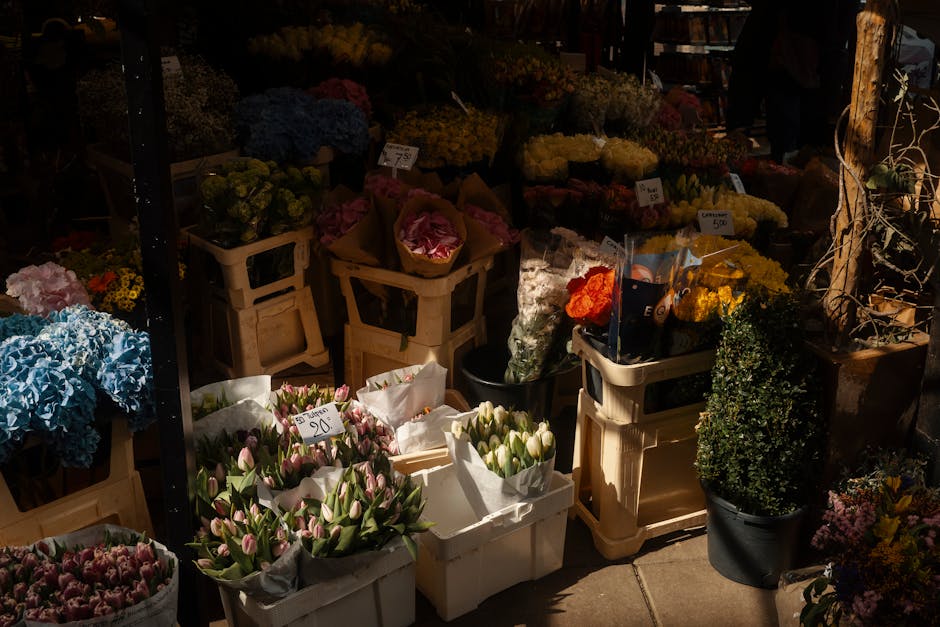
Picture a small independent florist preparing for a Borough Market pitch on a busy Friday. They have a clear seasonal offer: tulips, narcissi, ranunculus, and a few understated hand-tied bouquets. They arrive early, buckets are secure, pricing is visible, and the display is arranged by colour rather than by random mix.
On the first hour, customers ask the same three questions again and again: where the flowers came from, how long they last, and which bunches are best for a dinner table. Because the florist anticipated that, they already have simple answers prepared. Nothing dramatic. Just clear, calm replies.
By midday, the florist notices that the smaller, lower-priced bunches are moving faster than the larger premium options. Rather than guessing, they adjust the display slightly, move the faster-selling items to eye level, and make the premium arrangements more prominent for passing visitors looking for gifts.
The result is not magic. It is structure. The stall looks coherent, the stock feels fresh, and the customer experience is smooth. That is the real lesson: in a market like Borough Market, success usually comes from good decisions made before the rush begins. Small adjustments, day after day, make a lot of difference.
And yes, there will always be one customer who asks for "the nicest flowers you have" without knowing what that means. Fair enough. That is part of the charm.
Practical Checklist
Use this checklist before applying or trading. It is simple, but it catches the basics that get missed when people are busy.
- Confirm who controls trading permission and market rules
- Decide whether you want a regular, seasonal, or occasional setup
- Prepare business registration details and insurance documents
- Map out your flower range and likely best-sellers
- Check stall size, power access, water access, and storage needs
- Plan how you will keep flowers fresh throughout the day
- Set a clear pricing structure
- Prepare waste management and closing procedures
- Make your signage readable at a glance
- Train anyone who will help you on the stall
- Test your setup before your first busy trading day
- Review customer feedback after each session
If you can tick off those items, you are already ahead of a lot of first-time traders. It is not glamorous, but it works.
Conclusion
Selling flowers at Borough Market can be a fantastic opportunity, but it works best for florists who treat the pitch as a professional trading environment, not just a pretty retail spot. The rules matter because they shape how you present, how you operate, and whether the setup is sustainable in a crowded London market. When you understand the permissions, the standards, and the practical demands, the whole thing becomes far less intimidating.
For the right florist, Borough Market offers visibility, customer energy, and a chance to build a memorable brand in one of London's most recognisable trading spaces. The key is preparation: know the rules, keep the stall sharp, and make the experience easy for customers. That is usually what wins the day.
Get a free quote today and see how much you can save.
And if you are still weighing it up, that is fine. A good market decision should feel thoughtful, not rushed. Take the time, get the details right, and you will give your flowers the best possible stage.
Frequently Asked Questions
Do florists need permission to sell at Borough Market?
Yes. You should expect to need formal permission or an agreed trading arrangement before selling there. Borough Market trading is structured, so it is not a place for informal, walk-up selling.
Are Borough Market rules the same as London council rules?
Not always. Some requirements may come from the market operator, while others may involve local authority expectations or general business duties. It is best to confirm who controls each part before you apply.
Can a new florist apply, or do you need an established business?
New florists may be able to apply, but you will usually need to show that you can trade reliably, present well, and meet the market's practical standards. A polished plan helps a lot.
What documents are usually needed to sell flowers at a market like Borough Market?
Commonly requested documents include business details, insurance, identity information, and sometimes evidence of your trading model or product range. Requirements can vary, so do not assume a one-size-fits-all checklist.
Is public liability insurance necessary for florists selling in a market?
It is commonly expected and often essential for public-facing trading. Even though flowers are not a high-risk product, stalls in busy public areas still need proper cover.
Do florists have to follow special hygiene rules?
Yes, in the sense that your stall must remain clean, safe, and well managed. Water, stems, packaging, and waste all need sensible handling. If you sell related products, extra care may be needed.
What kind of flower stall works best at Borough Market?
A clean, easy-to-read display with seasonal stock, clear pricing, and strong visual focus tends to work best. Busy markets reward clarity. Customers should understand your offer within seconds.
Can I sell potted plants as well as cut flowers?
Possibly, depending on what the market allows and how your trading permission is set up. If you plan to sell plants, check whether any extra conditions apply before you commit stock.
How do I avoid waste when trading flowers in a busy market?
Start with a smaller, better-planned range, replenish carefully, and track what sells at different times of day. Flowers age quickly, so the right stock level matters more than filling every bucket.
Is Borough Market suitable for seasonal florists only?
No. Seasonal florists can do well there, but regular and hybrid operators may also fit the environment. The key question is whether your business can support the pace, presentation, and consistency the market expects.
What are the biggest mistakes first-time florists make?
The biggest issues are usually weak preparation, unclear pricing, poor stall layout, and misunderstanding who controls the rules. The flowers may be lovely, but the operation has to work too.
How should a florist prepare for bad weather at an outdoor market?
Plan for wind, rain, and temperature changes from the start. Secure your display, protect stock, and have a simple contingency plan. London weather can change quickly, and on market mornings, that matters more than people expect.